The Real Cost of a Missed Call Isn't the Call. It's Not Knowing.
Open the phone of almost any HVAC owner and look at the "Missed" tab.
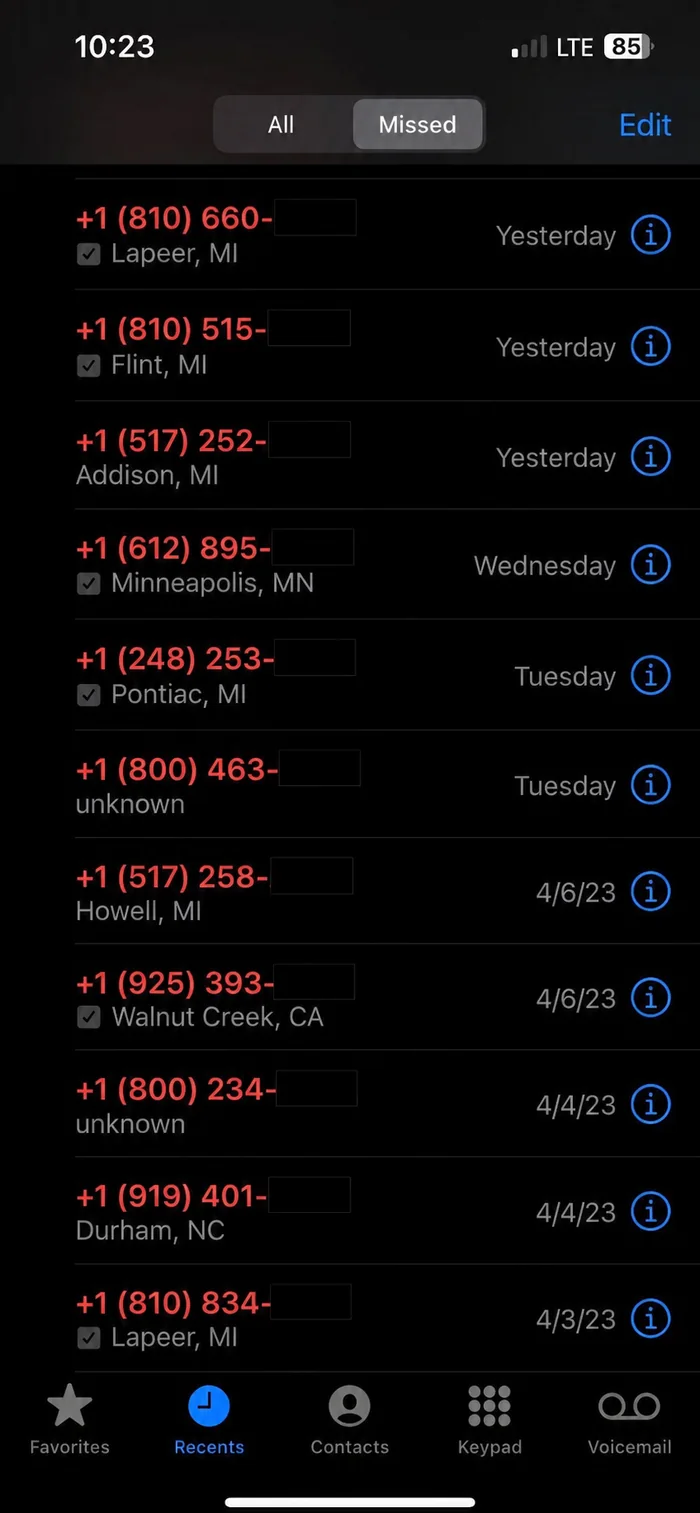
You'll see a list. Different area codes, different times of day. Some at seven in the morning, before the first appointment. Some at a quarter to eight in the evening, long after the office closed.
Every one of those red numbers was a person who picked up their phone because something in their home stopped working.
And here's the part nobody talks about: you have no idea which of those calls mattered.
The number you can't calculate
There's a certain kind of marketing that will tell you a missed call costs you exactly $412, or that three missed calls a week equals $47,000 a year. Those numbers are made up. Nobody can know what a call was worth without answering it.
That's precisely the problem.
One of those calls might have been a homeowner asking whether you service their zip code. Another might have been a twenty-year-old system that finally quit — a full replacement. A third might have been a property manager with eleven buildings looking for a new maintenance contract.
You will never know which was which. The information died with the voicemail beep.
That's the real cost. Not the lost job — the invisibility of it.
You can't measure it, can't forecast around it, and can't tell whether last month was slow because demand was down or because you were on a roof when the phone rang.
What actually happens on the other end
Put yourself on the caller's side for a second.
It's 7:47 PM. The air conditioning has been off for two hours and the house is getting warm. They search "AC repair near me," tap the first number, and get a recording.
They don't leave a message. They tap the back button and call the next company.
This isn't a knock on your business. It's just how people behave when they have a problem right now and a list of options in front of them. The company that answers wins — and it usually isn't the best company. It's the available one.
Your competitor doesn't have to be better than you. They just have to answer the phone.
"But I do call them back"
Many owners do. The next morning, between jobs, they work down the missed list.
Two things go wrong.
First, a percentage of those people have already booked someone else. Not because they preferred that company, but because their problem was urgent and yours was the number that didn't pick up.
Second — and this is the one that quietly eats your week — calling back is unpaid administrative work sandwiched between paid jobs. You're doing it in a truck, in a driveway, with a half-eaten sandwich. It's not a system. It's a tax on your day.
The Spanish-speaking caller you never hear about
In a large share of U.S. service markets, a meaningful percentage of inbound calls come from Spanish-speaking customers who need a bilingual answering service. About 44.9 million people in the U.S. speak Spanish at home (U.S. Census Bureau, 2024).
If your voicemail greeting is in English only, that caller usually doesn't leave a message at all. They don't show up on your missed-call list as a lost opportunity, because they never became one in your records. They simply called someone else.
This is the most invisible version of the problem: a customer segment that never enters your funnel, so you never notice it's missing.
What "answering every call" actually requires
The honest answer is that it requires someone available around the clock — nights, weekends, holidays, and the middle of a service call.
A human receptionist can't do that alone, and hiring for full coverage costs more than most independent shops can justify. Voicemail doesn't do it either; voicemail is a way of recording that you missed the call, not a way of answering it.
An answering service is closer, but most charge by the minute or by the call, which creates a strange incentive: you end up hoping fewer people call, or that the calls are short. That's backwards. You want people to call. You want them to talk long enough to explain the problem.
What we built, plainly
ApexSmartAI is a 24/7 HVAC answering service configured around your business — your services, your hours, your service area, your escalation rules.
- It answers inbound calls 24/7 in English and Spanish, switching languages on the same call.
- It captures the caller's name, number, and the actual problem.
- It sends the details to your team by text and email, so you get the lead while you're still on the ladder.
- The plan includes 500 minutes a month, so there's no per-minute meter inside that block and no reason to rush a caller.
- We build and manage it. You don't configure anything.
What it does is straightforward: it picks up, it listens, and it tells you what happened.
Judge it yourself
The only honest way to evaluate a voice product is to hear it. Call the live demo, ask it whatever you want, switch to Spanish mid-sentence, or describe a real call your business gets and see how it handles it.
If it doesn't sound like something you'd want answering your customers, you'll know in ninety seconds.
How to measure it this week
You can't fix a number you've never looked at. Before you buy anything, spend ten minutes doing this:
- Open the Missed tab on the phone customers actually dial. Count one normal week — not your best week, not your worst.
- Mark the ones outside business hours. Evenings, early mornings, weekends. That's your coverage gap, and it's usually bigger than owners expect.
- Call ten of them back and ask one question: did you get it taken care of? The answers tell you your real recovery rate, and it is almost never the number you'd have guessed.
- Write down what a booked job is worth to you. Not a national average — yours.
Now you have four real numbers instead of a marketing estimate. Whatever they say, they're yours, and they're the only ones worth making a decision on.
The callback window is shorter than you think
Many owners work the missed list the next morning, between jobs. Two things go wrong, and only one of them is obvious.
The obvious one: some of those callers already booked someone else. Not because that company was better, but because it answered.
The one that quietly eats your week: calling back is unpaid administrative work sandwiched between paid jobs. You do it in a truck, in a driveway, with a half-eaten sandwich, and it competes with the work that actually pays. It isn't a system. It's a tax on your day, and it grows in exactly the season you have the least slack.
What a captured call actually looks like
"We'll answer your phone" is table stakes. What decides whether you book the job is what reaches you afterwards.
A message that says someone called is not a lead. A lead has a name, a callback number, a service address and a description of the problem, and it reaches you fast enough to call back while the caller is still deciding. You can read a real call to our demo line and see exactly what landed on the phone about a minute later.
Three ways to close the gap
- Hire for it. Honest, and out of reach for most independent shops — full coverage is three or four people, not one.
- A human answering service. Works, but most bill per minute or per call, so the bill peaks in the same week your phone does.
- An AI answering service. Flat monthly rate, answers several calls at once, and handles English and Spanish without a menu.
All three beat voicemail. Which one fits depends on the four numbers you just wrote down.
Frequently asked questions
How much does a missed call cost an HVAC company?
Nobody can tell you honestly, and any specific figure you see is invented. What you can measure is your own: count a normal week of missed calls, call ten of them back, and see how many had already hired someone else. That number is real and it's yours.
Don't most people leave a voicemail?
Often they don't, particularly when the problem is urgent. They hang up and dial the next company on the list. Spanish-speaking callers who reach an English-only greeting almost never leave a message at all, so the lost job never appears in your records.
Isn't calling back the next morning enough?
Sometimes. But a share of those callers have already booked someone else, and working the missed list is unpaid administrative time squeezed between paid jobs — in the season when you have the least of it.
What actually counts as capturing the call?
A name, a callback number, a service address and a description of the problem, delivered to you fast enough to call back while the caller is still deciding. A message saying someone called is not a lead.
We help you get more customers for your business.
Hear it for yourself
Maya answers your questions on pricing, setup and getting started — and you hear the product itself while she does. In English or Spanish.
📞 Talk to Maya — (786) 952-4321Or try it on your own calls: 7 days free, $0 today.
Start your free trialPrefer we call you?
Leave your details and we'll call you back — no pressure, no obligation.